
The campground was unattended. There was no office, no one to check them in, and no one waiting to collect their money. Just a phone number in the Yellow Pages.
Tyler and Jackie Duffy had arrived at a small campground in Lost River, West Virginia. They had no idea that their stay would eventually lead them to build a company serving campgrounds across the United States and Canada.
“When we pulled into the campground, we called the number, and they said, ‘Just pick any site, and we’ll come along and collect the money,’ ” Tyler remembered.
Two weeks passed before anyone came to collect payment.
And Tyler started thinking.
Tyler had helped his brother start a business in oil exploration, a venture that required extensive travel. With so much time spent on the road, Tyler and Jackie grew tired of living out of suitcases, packing and unpacking, and moving from one hotel room to the next. So they bought an RV.
It gave them a home away from home as they drove from job to job. And in the spring of 2005, their journey brought them to that little campground in West Virginia.
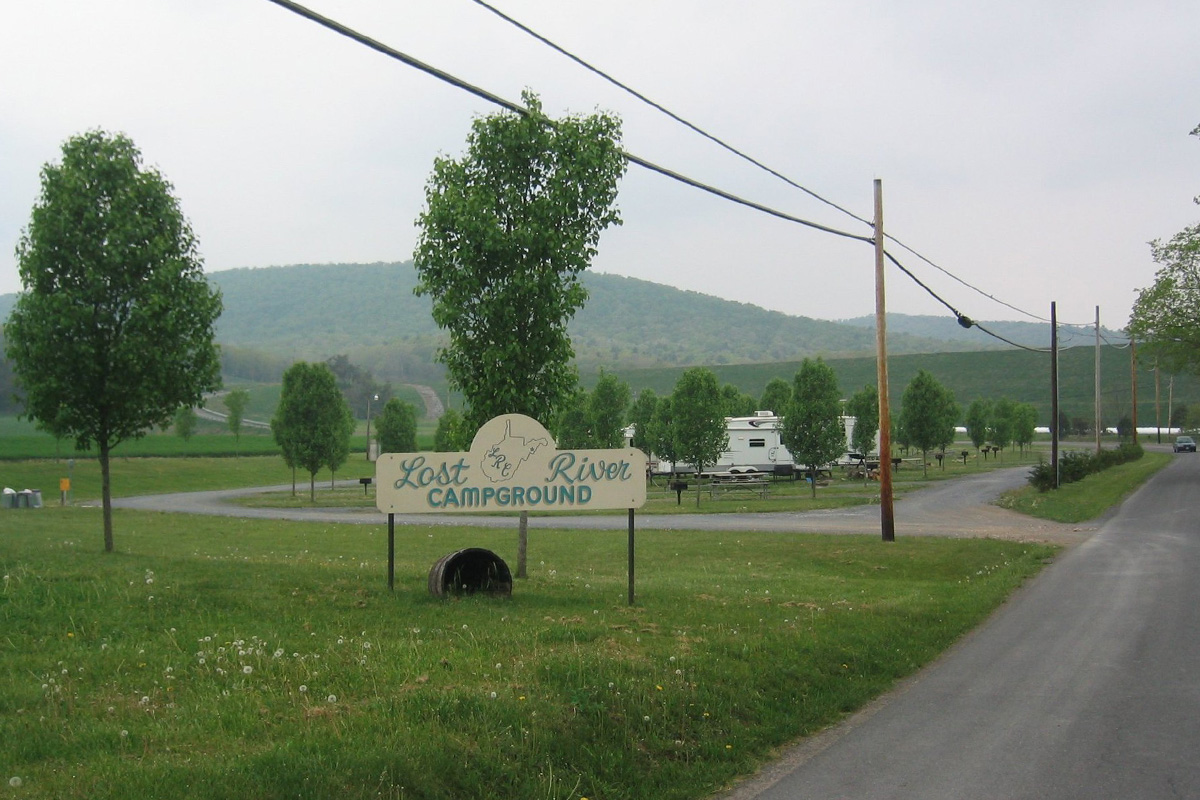
The Duffys spent about three months there. Every weekend, they watched campers settle into their sites and leave a few days later.
“From the outside looking in, we were thinking, these people could just be coming in using the water and electricity, not paying for it, and leaving,” Jackie said. “As a business owner, that could be costing you money because you aren’t getting reimbursed for the expense of those utilities.”
Around that time, self-service kiosks were beginning to appear in airports.
“Tyler kept saying, ‘There’s got to be a better way to do this,’ ” Jackie recalled. “ ‘What if we did a kiosk outside that people could use to check in and out of a campground?’ And it started this whole flow of conversation.”
That conversation eventually led to a prototype. The idea was straightforward. Campers could check themselves in, pay for their stay, and have their site’s utilities activated automatically. When their paid stay ended, the utilities would shut off.
But would campground owners be interested? There was one way to find out.
Tyler and Jackie packed up their prototype and headed to their first campground industry trade show in Phoenix, Arizona. They weren’t about to settle for simply telling campground owners how their invention worked. They wanted to show them.
“We made up this whole display where there was a spigot that went into a bucket with a water hose,” Jackie explained. “It was a circular system, so as soon as they checked in on the kiosk, the water would turn on. We had an electrical box, and it would light everything up. We had a board behind us. We had little LED lights, and it would only turn on the site where you checked in.”
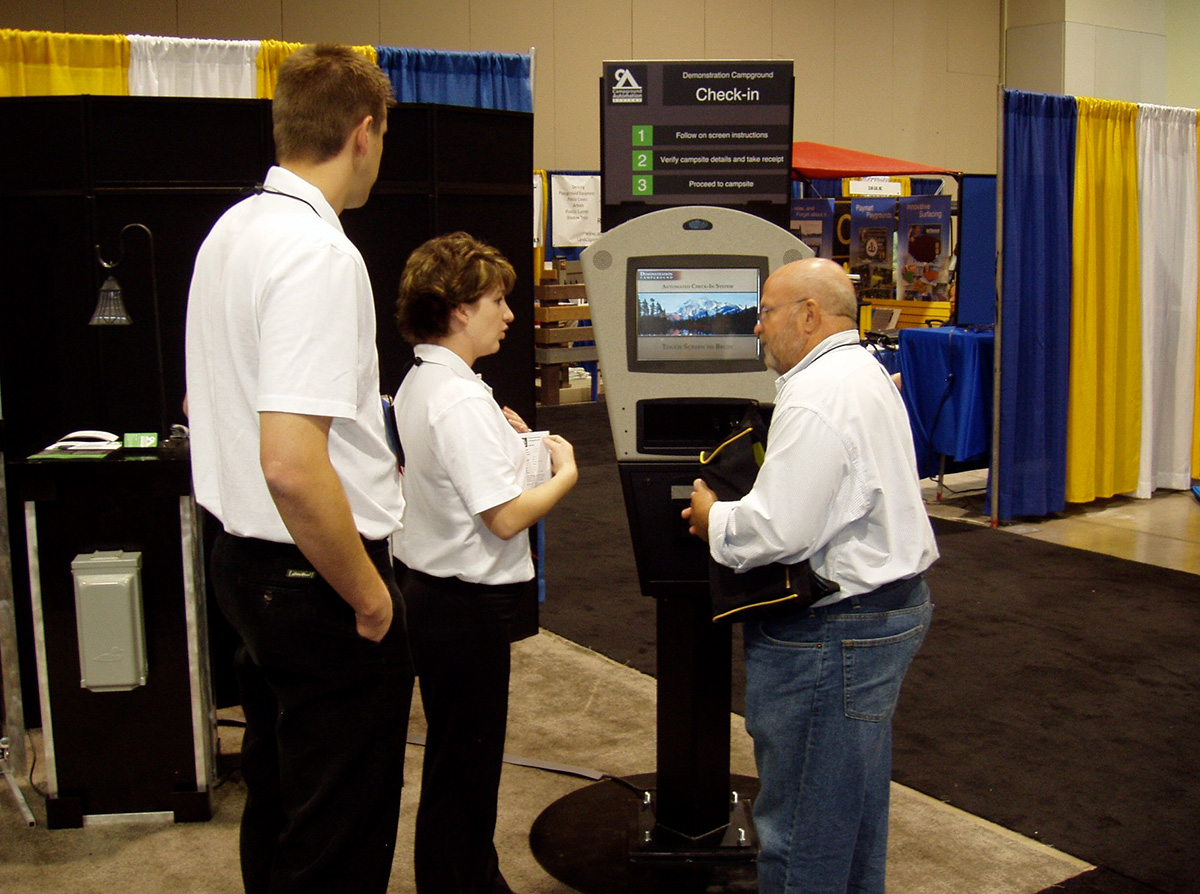
The demonstration attracted attention. Campground owners could see the potential, but there was a catch.
“Everyone said the same thing: ‘This is amazing. This would be great for what we want to do, but it’s got to work with our reservation system,’ “ Tyler said.
The couple kept listening. They asked campground owners what they liked about their existing systems, what frustrated them, and what they wished their software could do.
And they heard plenty.
When the Duffys returned to the trade show the following year, they heard the same message. The kiosk was a great idea. But without a reservation system to support it, they weren’t going to get very far.
After two years of talking with campground owners and exploring the possibilities, the Duffys reached a crossroads.
“We had a decision to make: either we had to build a reservation system, or we had to close up shop,” Tyler said. “So we called it the summer of code.”
The bonus room above their garage became the development headquarters. Tyler and three developers spent long days working through ideas, writing code, and figuring out how to build software that could handle the complexities campground owners described.

Jackie brought another perspective to the table.
“Because we had been full-time RVers for so many years, we had lots of ideas,” Jackie said. “I was the one who always made the reservations, so I was like, ‘This is frustrating, and this is frustrating. It would be super helpful if it had this...’ Two of our developers were also big campers, which is part of the reason they wanted to join our business.”
One feature was especially important: real-time availability.
“If site 35 was available, I wanted to click it and know I had it,” Jackie explained. “We built the software on the premise that everything is live right now. You can trust the data.”
Today, booking a campsite online seems perfectly ordinary. But at the time, the idea of allowing campers to select and reserve a specific site online was unfamiliar to much of the industry. And the Duffys were determined to make it work.
As the next trade show approached, the team raced to finish the first version of the software.
“We cranked out 1.0 beta with many long nights,” Tyler remembered. “I always joke that what we showed off at the trade show was very fresh paint. We were writing code into the night and late into the morning, right before we walked onto the trade show floor.”
This time, they had more than a kiosk to demonstrate. They had a reservation system.

And they found their first customer.
Lorraine and Daren, owners of Happy Hills Campground in Ohio, agreed to give the new software a try. Tyler and Jackie drove up to meet them, learn about their operation, and understand what they needed the system to do.
Twenty years later, Happy Hills is still a CampLife customer. But winning the trust of other campground owners wasn’t easy.
“Lots of people had tried to build software for the campground industry and then gone out of business,” Jackie explained. “So we heard over and over again, ‘If you are still in business in two or three years, I’ll talk to you.’ “
For campground owners, the concern was understandable. Their reservation systems held critical business information. If a software company disappeared, they could be left scrambling to recover their data and keep their operations running.
“Knowing the amount of faith that Happy Hills placed in us, that they were willing to take that chance, is huge,” Jackie said. “Those were things we were not aware of and that now we appreciate so much.”
Lorraine became more than the Duffys’ first customer. She became an important part of their growth.
She had specific requirements for her campground, and Tyler and his team worked to accommodate them. The business rules engine they developed gave the software flexibility to handle different campground operations without requiring every customer to run their business the same way.
“Whatever Lorraine wanted, we built it,” Tyler said. “She became a tremendous referral for us. I remember the director from Ontario saying, ‘You need to thank Lorraine. She single-handedly put you guys over the top. She was really singing your praises.’ “
Other customers played similar roles.
“Certain customers throughout our life cycle have really driven our growth,” Tyler shared. “Normandy Farms is a key customer that always wants to be cutting edge, and they still today are driving us toward innovation.”
“It kind of changed the way we approached business because it was all about ‘What can we do to meet the needs of the customer?’ “ Jackie added. “We would talk to one customer, and they needed this. We’d talk to another customer, and they needed that. So we asked, ‘How can we set the technology up so it will work for both of them?’ “
It was an approach that served them well until one of their biggest accounts walked away.
A customer who operated multiple parks decided to bring reservations in-house. For a growing company, the loss was significant.
“We felt like we were getting there, but we’d just lost a huge chunk of our revenue,” Jackie recalled. “How do we manage this?”
They went away for a weekend, just the two of them, to talk about the future. What wasn’t working? What needed to change? And what kind of company did they really want to build?
They returned from that weekend with something that would shape CampLife for years to come.
And it had very little to do with software.
Coming next: The Heart of CampLife: 20 Years of People, Purpose, and Possibility
Maximize your property with modern and seamless campground management software
for just $3 per reservation.


